

A Comprehensive Guide to AI Search Content Optimization
What changed in AI search this year, and how to build content that Google AI Overviews, AI Mode and ChatGPT will actually use.
20 min read

If you haven't yet, pause and check out our content best practices. This part isn’t rocket science…Your content is the foundation of any ranking strategy, but let’s be clear: it’s not just about cranking out blog poscreate new content ts. In competitive markets, a single article isn’t going to cut it. What’s required is a true content ecosystem: owned resource hubs, in-depth guides, FAQs, videos, infographics, tools, maybe even interactive elements. Each of these content touchpoints work together to address your users' questions and pain points.
Google (and the AI tools utilizing its knowledge) increasingly look for this breadth and depth as proof of expertise. If your competitors are serving up richer, more useful experiences, they’ll win the visibility battle—no matter how polished your lone blog post might be.
Content optimization is most of the battle, but to truly win visibility in AI-powered search results, your brand needs strong off-page signals, those external cues that tell Google, Bing, ChatGPT, Perplexity, etc., that your content is credible, referenced, and worth surfacing. This guide explores the key off-page strategies that shape how large language models and search engines interpret and elevate your brand in AI-driven environments.
What comes next is why we are here now. Making sure your content is found and your brand has a positive online presence is crucial.
Before we dive into tactics, it’s important to define two foundational ideas that shape how AI engines perceive and prioritize your brand and your website. This is the core of how visibility works in an AI-first world. Let’s start with defining some key concepts:
An entity is a distinct, identifiable object, person, brand, or concept recognized by search engines and AI tools. Entities help machines understand context and relevance. In AI-powered search, the presence, consistency, and associations of your entity heavily influence whether you're surfaced in answer boxes or AI summaries. In plainer terms, these are the nouns of the internet.
Google’s Knowledge Graph (and Microsoft Satori for Bing) is a structured database that connects entities (brands, people, places, and concepts) based on context and relationships. If you’re mapped as an entity within the graph and associated with relevant topics, your chances of being cited in Google’s AI Overviews and general AI Search increase substantially. Think of it as your brand’s backstage pass to AI visibility.
While we often talk about Google’s Knowledge Graph, don’t forget that LLMs like ChatGPT and Perplexity use Google and Bing search to power their responses. Even if the LLM doesn’t crawl the mention directly, it can still “see” your reputation based on what’s indexed in traditional search engines. The adage still has some merit: Optimize for Google, and the others will follow suit.
What we are trying to get to in the simplest terms is to have positive online word of mouth speaking about our brand, product, or service. Think of it this way: if Guy Fieri, Gordon Ramsay, Rachael Ray, Padma Lakshmi, and José Andrés all said they love your cookware, sales would soar. Why? Because people trust familiar, respected names, especially when they show up across different media.
Now imagine Google, Bing, or ChatGPT picking up on those mentions in interviews, recipes, review roundups, and event listings. That’s how entity trust is built in the AI era, not just through keywords, but through reputation, relevance, and repetition across high-authority sources.
If the whole internet is saying “this brand is great,” search engines (and LLMs) are going to believe it too.
Let’s break it down…
Your brand needs to be understood as an entity. These may be things you’re already doing, but they need to be in your bones and part of your thinking whenever opportunity strikes. Strengthening your entity profile includes:
Simply stated by Search Engine Journal, “AI Overviews and LLM-generated answers prioritize brands that own their knowledge graph, are widely referenced, and are recognized leaders in their industry.” (Yes, I just helped ‘SEJ’ with their knowledge graph. But, as we preach here at BCM, good content gains backlinks.)
While backlinks have long been the currency of SEO, unlinked brand mentions in relevant context are becoming more critical in AI search. (More on backlinks below.) Large Language Models (LLMs) like those powering ChatGPT and Google AI Overviews interpret consistent brand mentions across trusted domains as a strong indicator of credibility, topical relevance, and real-world influence.
Why This Matters:
AI systems build contextual understanding from patterns of references, not just hyperlinks.
The goal isn't backlinks, and investing resources in a backlink acquisition strategy that includes cold outreach and prioritizing quantity over quality is unlikely to succeed. What will win is brand recognition in trusted, AI-visible environments. Earning high-quality mentions in places your audience (and AI models) respect is more impactful than most backlink outreach.
Example: A legal tech startup cited in Law.com, even without a backlink, may surface in Perplexity answer summaries more often.
Not all mentions are equal. How people talk about your brand influences whether AI will cite it.
Google’s Knowledge Graph also captures the sentiment about you, the “Entity,” and LLMs may be even better at parsing sentiment information than search engines since they are experts at context. Search engines use proxies (links) to ascertain trust. While this is good, it’s not perfect and can be gamed. LLMs use the entirety of their contextual awareness.
To put it simply, Mentions form the dataset while Sentiment determines your role in the story.
When we think about Schema markup, most people default to adding it on their own website, and we should, as previously noted in our content best practices. But in the world of Answer Engine Optimization (AEO), structured data on other people’s sites can carry just as much, if not more, weight.
Why? Because AI systems, including Google’s AI Overviews and LLMs like ChatGPT and Perplexity, scan the web for contextual signals. If multiple external sources are consistently tagging your brand in schema-rich environments, it strengthens your entity profile and improves your chances of being cited or surfaced in AI results.
Event platforms that use schema for organizer, performer, or sponsor roles
If you’re hosting, sponsoring, or speaking at an event, make sure your brand name is included in the structured data.
Business and service directories
Sites like G2, Clutch, TrustRadius, and Capterra include detailed service-level schema.
Guest articles, interviews, and podcast appearances
Many publishers now use schema types like Person, Organization, or CreativeWork to identify contributors.
How to Make This Happen:
Example Schema Snippet.
You could potentially send something like this along to any external site that is publishing your content or mentioning your brand to ensure accuracy:
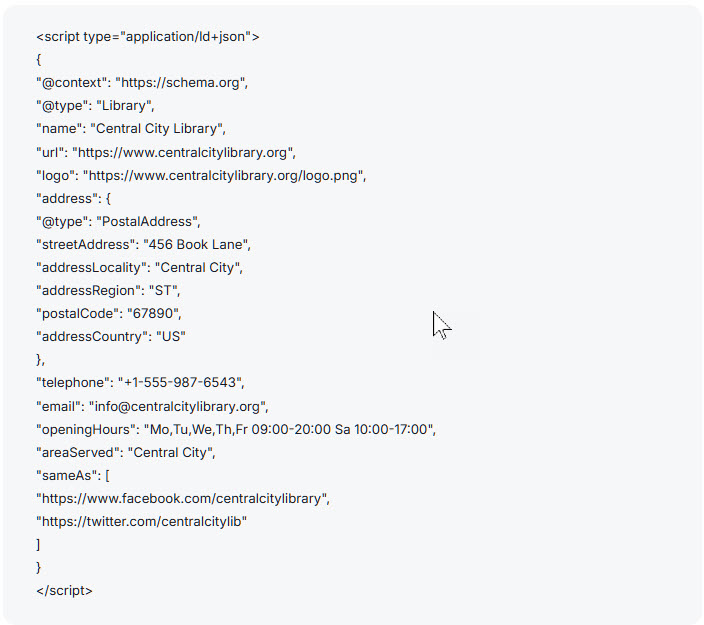
To summarize the actions to take here:
AI-driven search engines and LLMs like ChatGPT, Perplexity, and Claude are trained on massive public datasets, including social media posts, Reddit threads, and public forums. Active, authentic engagement in these channels can significantly boost your brand’s visibility and credibility in AI ecosystems.
Why This Strategy Works
|
Platform |
Why It Matters for AEO |
Pro Tips for Optimization |
|
|
Reddit is Google’s second most-cited source in AI Overviews. Perplexity Reddit citations jumped from <0.11% to >4.5% in 2025. Niche subreddits (e.g., r/Travel, r/Education, r/Marketing) drive high topical relevance. |
Participate authentically in relevant threads. Provide helpful, context-rich answers. Avoid overt promotion—upvotes drive visibility. |
|
Quora |
Frequently cited in AI-generated summaries. Great for question-based content aligned with Answer Engine queries. |
Target questions your customers are already asking. Use concise, expert-level answers with links only when relevant. |
|
X (Twitter) |
Ideal for thought leadership and real-time commentary. Threads and quoted tweets are sometimes pulled directly into AI results. |
Share timely insights. Use threads for deep dives. Engage with influencers to boost reach. |
|
|
A top platform for B2B authority. Expert posts and comments often surface in AI-driven results and Knowledge Graph associations. |
Encourage executives to post POV content. Join industry conversations in groups and comment thoughtfully on trending posts. |
|
Medium |
Strong for personal entity visibility and long-form thought leadership. Helps reinforce expertise in Knowledge Graph even if not on your own domain. |
Publish under leadership bylines. Use canonical tags to point back to your site. Optimize posts with semantically rich titles and structured sections. |
In summary:
Backlinks were once the backbone of SEO, but their importance has steadily declined, particularly in the AI search era. While authoritative backlinks can still function as trust signals, they are no longer the most influential factor for visibility in either traditional search or large language models.
Google itself has confirmed this shift.
“Backlinks as a signal have a lot less significant impact compared to when Google Search first started out,” said Google's Gary Illyes in 2024.
– Search Engine Land
That’s a clear signal: the chase for backlinks is now less impactful than building a strong entity profile, earning brand mentions, and fostering positive sentiment across the web.
What Still Matters:
What You Can Deprioritize:
In this context and assuming your content efforts are in good order, we recommend spending more time improving your off-site entity signals (brand mentions, structured data, sentiment) than investing in traditional link-building, where good content earns natural links organically. When a partner site can easily add a backlink, go for it. But chasing volume-based links is no longer worth the effort.
Including link requests and promotion through standard operating procedures like press release footers, partnership agreements, etc., or consistent use of backlinks in bios/descriptions and bylines is still a good and recommended practice to help increase your overall volume and quality of links.
For businesses with a physical presence, or any brand with regional relevance, local visibility is an off-page AEO essential. Large Language Models (LLMs) increasingly surface location-specific answers and recommendations, especially in travel, retail, healthcare, education, and service sectors.
And while much of this starts with your own site and Google Business Profile, external validation through local content and third-party signals is what often determines whether your brand is cited in AI-generated answers.
LLMs like ChatGPT, Bing Chat, and Perplexity frequently utilize content from these sources, even when users don’t specify a location if your brand is consistently tied to a region.
Source: Buzzabout
Once you’ve invested in off-page visibility, mentions, sentiment, and structured references, you need to monitor what’s working, what’s not, and what’s missing.
This is all about understanding where and how your brand is referenced, whether you're being cited in trusted sources, and what users are saying that might influence how LLMs perceive your authority and intent.
If you’re a parking company near LAX, and Buzzabout reveals Reddit and Twitter threads full of frustration around terminal shuttles or pricing confusion:
Now you’re building both trust and visibility, while seeding content that LLMs may later cite.
Comparison Chart - Some of the Best Tools for Monitoring Off-Page Visibility Signals
|
Tool |
Key Features |
Strengths |
Price Tier |
|
Buzzabout |
AI-driven entity monitoring, topic trend analysis, community listening |
Strong LLM/AEO alignment, real brand perception data |
$$ (Mid-range) |
|
Brand24 |
Social + web monitoring, sentiment scoring, competitor comparison |
Broad platform support, nice UI |
$$ (Mid-range) |
|
Mention |
Social media & blog tracking, influencer ID, team workflows |
Strong real-time alerts, good team tools |
$$$ (High-end) |
|
Google Alerts |
Simple alert system based on keyword triggers |
Free, easy to start |
Free |
|
Ahrefs / SEMrush |
Backlink + mention discovery, authority scoring |
Strong backlink insights, weak on sentiment |
$$$ (High-end) |
|
Talkwalker |
Enterprise-grade listening, advanced sentiment AI, visual mention tracking |
Deep analytics and multi-language support |
$$$$ (Enterprise) |
Pro Tip: Buzzabout and Brand24 are particularly useful for detecting tone, spotting trends, and understanding how your brand is being talked about, not just where.
|
Signal Found |
Action to Take |
|
Positive mention in blog or Reddit |
Reach out to thank, request link or add schema; share to amplify |
|
Negative sentiment around a topic |
Address it directly (comment, post, or new content); offer real solutions |
|
Unlinked citation on a trusted domain |
Email the editor or webmaster and politely request attribution |
|
User-generated questions in forums |
Use as inspiration for blog FAQs, videos, or social content |
|
Trending topics related to your service |
Spin up fast content: “What People Are Asking About [Topic] in 2025” |
|
Competitor praise in the same thread |
Analyze positioning and user language; adjust messaging or content coverage |
The evolution of search toward AI-generated answers is rewriting the rules of visibility. To appear in tomorrow’s answer engines, brands need more than just strong content; they need a trustworthy, widely-recognized presence across the web. This is Answer Engine Optimization - AEO.
That means acting like an entity. Cultivating authority. And making sure your name surfaces wherever your audience, and the algorithms, are looking.
The investment you make in off-page AEO today will compound over time. And while the returns may not always be instantly measurable, the signal they send to AI systems is clear: "This brand knows what it's talking about. And everyone else knows it too."
Let’s make sure they do.
What’s the difference between SEO and AEO?
SEO optimizes your content and website for traditional search engine rankings, typically the “10 blue links.” AEO (Answer Engine Optimization) goes a step further. It focuses on helping your brand appear within AI-generated answers, such as Google’s AI Overviews, Perplexity summaries, or ChatGPT citations. While SEO is still essential, AEO reflects how search behavior and discovery are evolving; users are often reading AI answers instead of clicking links.
How long does it take to see results from off-page AEO?
It depends on the authority and velocity of your off-page activity. Typically, 3–6 months is a realistic window to start seeing shifts in AI citations, branded query trends, or engagement improvements. Unlike traditional SEO, AEO also rewards positive momentum in reputation and entity clarity, which builds over time.
What are the best tools for tracking AI visibility?
Tracking AI visibility is still an evolving challenge, and no single tool provides a complete picture. However, several leading platforms have emerged that help marketers measure and optimize for AI-driven search results:
Trakkr.ai
— Built specifically for monitoring AI Overviews and generative search results, offering prompt tracking and visibility insights beyond traditional SERPs.
Ahrefs — A comprehensive SEO suite with strong backlink analysis, keyword tracking, and some early capabilities for detecting AI-influenced SERP changes.
SEMrush — Robust for competitive analysis, keyword tracking, and content visibility, with growing features for AI overview monitoring.
Profound — Provides intelligence on AI search integrations, helping uncover how AI answers are sourcing and presenting brand-related information.
Other Notable Tools — Platforms like BrightEdge, Conductor, and SISTRIX are beginning to add functionality aimed at understanding AI’s role in search results.
It’s worth noting that these tools can be expensive and often require enterprise-level subscriptions to unlock full AI visibility capabilities. As an agency, we’re able to provide cost efficiencies for our clients by leveraging our access to multiple premium platforms, ensuring they get actionable insights without carrying the full cost burden.
Is it worth doing even if I can’t measure the results precisely?
Yes. Off-page AEO creates visibility and trust in environments where clicks aren’t always the end goal, like AI summaries or no-click searches. Even if you can’t tie every impression to a conversion, the brand lift and perception benefits are tangible. Plus, many AI tools pull from indirect sources like Reddit, forums, or citations, so broader visibility often equals long-term wins.
Do I need backlinks to succeed with off-page AEO?
Well, it all helps... Backlinks can help, but they’re no longer the strongest off-page signal. Focus more on structured mentions, high-quality brand citations, and positive sentiment in trusted third-party spaces. Google and LLMs now prioritize entity clarity and reputation over link volume. Should you still try to get the low-hanging fruit backlink or the high-value backlink? Yes.
How do I know if AI platforms are citing or using my content?
Right now, tracking AI citations is imprecise, but improving and BCM is introducing new tools to do this tracking. Tools like Buzzabout, Perplexity’s search history, and AI-focused modules in SEMrush and seoClarity can help identify citation patterns. Also, monitor branded traffic, direct visits, and mentions in forums or publications. A spike in unlinked mentions or direct search volume often suggests you’re being surfaced, even if you can’t see it yet.
What’s the best way to respond to negative sentiment online?
Start by listening: Use brand monitoring tools to spot recurring complaints or misinformation. Then respond factually, calmly, and constructively, either directly in forums or by publishing clarifying content on your site. Even a single, well-placed rebuttal can shift the narrative AI systems ingest, especially if it’s echoed elsewhere online.
Should my executives or team be posting on LinkedIn and Reddit?
Yes, if it's strategic and authentic. Posts from real people (especially subject matter experts) help build entity-level authority and demonstrate first-hand experience, which is part of Google’s E-E-A-T framework. On Reddit, helpful commentary, not promotion, is key. On LinkedIn, thought leadership that gets engagement can increase your entity’s association with key topics.
How do I help partners or event hosts mention us correctly?
Create a brand boilerplate kit:
What are signs my off-page visibility is improving?
Watch for:
These signals often appear before traditional SEO performance catches up.
Can off-page AEO help with Local SEO?
Absolutely. Many off-page AEO strategies, like citations in event listings, reviews, and local press, also strengthen local entity signals. LLMs and Google alike pull location-specific answers based on local authority and sentiment. It’s one of the best ways to own your geographic niche, especially if your competition isn’t doing it yet.
How is Google’s Knowledge Graph different from LLM training data?
Google’s Knowledge Graph is a structured database curated by Google, connecting verified entities (people, places, companies) to concepts, relationships, and facts. In contrast, LLMs like ChatGPT are trained on unstructured web data, ingesting patterns from forums, news, social media, and more. However, both rely on public references to understand a brand's role in the world—and consistency across both matters for discoverability.
What is the difference between a citation and a backlink in AEO?
A citation is any mention of your brand, product, or service, even if it doesn’t include a hyperlink. In AEO, consistent citations across high-authority platforms help establish entity trust, especially when structured with schema. A backlink is a hyperlink to your site, which is helpful, but AI models prioritize the context and sentiment of citations more than the link itself.
Are podcast appearances good for AEO?
Yes. Podcast episodes often include structured metadata and detailed show notes. If you or your brand is listed as a guest and mentioned in schema-rich environments like Apple Podcasts, Spotify, or Podchaser, those mentions become part of your discoverability layer. Bonus if the podcast site includes structured Person or Organization markup and a descriptive summary of the discussion.
Do brand mentions in images or videos count toward AEO visibility?
Not directly. AI systems can't “read” embedded text in images the same way they parse web copy. But image EXIF and video metadata (titles, descriptions, alt text, captions) are crawlable and help associate your brand with topics. For videos, adding transcripts or schema (e.g., VideoObject) boosts visibility and provides context to search engines and AI tools.
How often should I review my off-page AEO signals?
Monthly monitoring is a good baseline. For high-impact brands or competitive industries, weekly alerts (via Buzzabout, Brand24, or Google Alerts) help catch trends or risks early. Tie review cycles to marketing campaigns, PR pushes, or new content rollouts to assess how external visibility aligns with internal initiatives.
Should I be using press releases as part of my AEO strategy?
Yes, but strategically. Don’t rely on mass distribution for backlink volume. Instead, issue press releases when you have real newsworthy updates (partnerships, studies, product launches). Prioritize credible syndication platforms that use schema, and track pickup across structured sites and niche publications relevant to your sector.
To increase your brand's likelihood of being surfaced in AI-generated results from platforms like ChatGPT (OpenAI), Gemini (Google), Claude (Anthropic), and Bing Copilot (Microsoft), you should prioritize visibility across high-authority, structured, and AI-crawlable external entities. These platforms rely heavily on trusted, semantically rich data sources, not just general web content.
Here’s a breakdown by external entity types that feed or influence these AI systems:
These are high-signal domains that help define and validate your entity in systems like Google’s Knowledge Graph, Microsoft Satori, and others.
|
Source |
Why It Matters |
|---|---|
|
Wikipedia |
Canonical source for entity grounding across LLMs. |
|
Wikidata |
Structured, machine-readable entity data used by Google, Bing, and others. |
|
Crunchbase |
Entity source for business identity, especially for tech and startups. |
|
|
Key for professional identity (especially for founders, executives, agencies). Used in Bing + inferred in GPTs. |
|
Google Business Profile |
Core local knowledge graph signal. Feeds Maps, search snippets, and entity relations. |
|
IMDB, MusicBrainz, etc. |
For media personalities or creators — highly indexed structured KGs. |
Pro Tip: Having a Wikidata entry that links to your official website, social profiles, and other identifiers significantly increases your AI visibility.
Getting mentioned in reputable, indexed media outlets provides powerful contextual and reputational signals that extend beyond backlinks. These mentions help search engines and AI systems identify your brand as authoritative and trustworthy within its category. While Tier 1 national outlets build broad credibility, industry‑specific trade publications often carry equal or greater weight for topical authority..
|
Tier |
Examples |
Notes |
|---|---|---|
|
Tier 1 Media (Universal Authority) |
NYTimes, WSJ, Bloomberg, Forbes, CNBC, Reuters |
Broad trust signals; valuable for any client regardless of industry. |
|
Tier 2 Media (Business & Consumer) |
Fast Company, Inc., Entrepreneur, NPR, Business Insider |
Solid for thought leadership and broad consumer/business exposure. |
|
Industry Media – Travel & Hospitality |
Skift, Conde Nast Traveler, Travel Weekly, Hospitality Net |
Strong topical authority for tourism, hospitality, and destination marketing. |
|
Industry Media – Insurance, Retail & Cooking |
Insurance Journal, Retail Dive, Modern Retail, Food Business News, Bon Appétit |
Great for niche credibility in financial services, retail brands, and CPG/culinary sectors. |
|
Industry Media – Education & Professional |
EdWeek, Inside Higher Ed, The Chronicle of Higher Education, Harvard Business Review, SHRM |
Ideal for clients in education, training, and B2B professional services. |
Beyond traditional media mentions, authoritative web and review platforms provide some of the strongest structured signals for both search engines and AI systems. Platforms that combine user‑generated content (UGC), schema markup, and rich media often become trusted training data for large language models.
|
Type |
Examples |
|
Product/Service Reviews |
G2, Capterra, Trustpilot, Yelp (for local) |
|
Event Listings |
Eventbrite, Meetup, local media calendars |
|
Video & Audio |
YouTube (with transcripts/captions), podcasts with RSS + summaries |
|
Schema-Rich Websites |
Your own site with schema.org, FAQ, How-To, Product, Review, and Organization markup |
Transcripts and summaries on YouTube or podcast platforms are often indexed and used in training LLMs.
While not all large language models crawl social platforms directly, social and community sources still influence how your brand is represented in AI‑powered results. Many of these platforms feed into LLMs through summaries, scraped content, or third‑party data pipelines.
Effective social community management ensures your brand’s presence on these channels delivers high‑trust, topical, and reputational signals.
|
Platform |
Signal Type |
|
|
High-trust community insights; scraped and used in LLM training |
|
Quora |
Frequently used as a knowledge source for Q&A responses |
|
Twitter/X |
Temporal and reputational mentions; less structured but still impactful |
|
Medium, Substack, Dev.to |
Long-form posts often included in LLM corpora, especially for thought leadership |
These power retrieval-augmented generation (RAG) and agentic systems.
It’s not only press coverage and social chatter that shape how AI systems perceive your brand. Large language models and AI-powered search engines also draw from structured data aggregators and databases.
| System | Why It Matters for AEO | Examples |
|---|---|---|
| SEO Intelligence Tools (Proxies) | Moz, SEMrush, and Ahrefs don’t feed AI directly, but they track the same authority signals (quality backlinks, topical relevance, content depth) that Google and Bing use. Treat their scores as useful proxies, not gospel. | Moz, SEMrush, Ahrefs |
| Financial & Business Databases | AI tools (especially Claude and Gemini Pro) lean on trusted financial and market data feeds to verify company facts, growth metrics, and industry positioning. If you’re absent here, you may not exist to them. | Statista, CB Insights, Pitchbook |
| Local Data Aggregators | Feed location and business details into Google, Bing, Apple Maps, and third-party LLM datasets. Essential for physical businesses or service-area entities. | Foursquare, Data Axle, Yext |
Do the AI Engines like this post?
[coming soon]
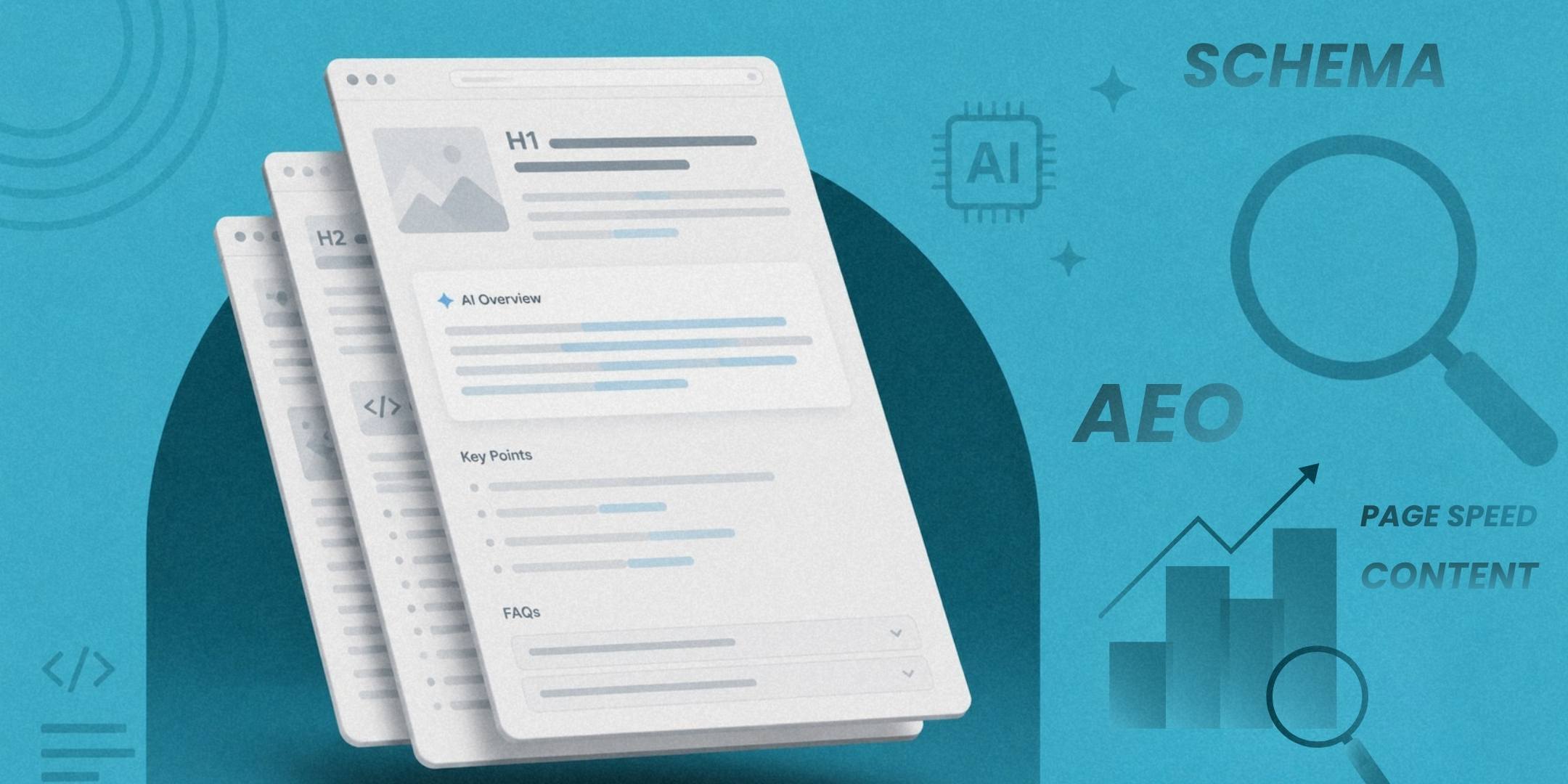
What changed in AI search this year, and how to build content that Google AI Overviews, AI Mode and ChatGPT will actually use.

AI Overviews didn't kill SEO—they exposed where it was running on autopilot. Learn why SEO as content marketing is thriving and how to adapt your...
Generative AI is disrupting Google’s dominance. Discover how zero-click search and new user habits are reshaping digital marketing forever.